After the Fail: How the MOT Retest Rules Really Work (And Where Drivers Quietly Lose Money)
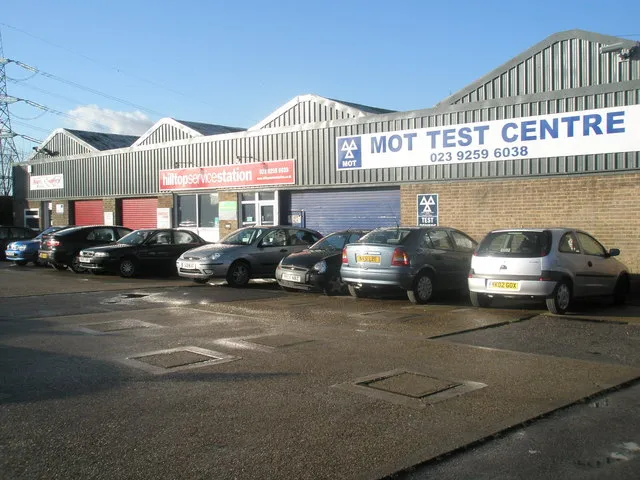
Photo: Basher Eyre, CC BY-SA 2.0, via Wikimedia Commons
There's a particular look a tester gives you when the sentence ends with 'I'm afraid it's failed'. It isn't unkind. It's the look of a bloke who knows the next ten days are going to cost you money and that a good chunk of it is avoidable.
The sheet in your hand is the VT30, the refusal certificate. It lists what's wrong in three columns — dangerous, major, minor — and then a separate line of advisories. What happens between now and the retest decides whether you pay for one inspection or two. Here's the blunt version.
Ten days is ten working days, not ten days
The retest window runs for ten working days, counted from the day after the test. Weekends and bank holidays don't count. Fail on a Friday before a bank holiday Monday and you've actually got a decent run at it. Fail on a Tuesday, then spend nine days waiting for a backordered suspension arm, and you'll cross the line without noticing.
Crossing that line is what converts a cheap retest into a full second MOT at full price. On a car, the maximum MOT fee is capped at £54.85, so a full re-test isn't ruinous — but it's £54.85 you didn't need to spend, plus another day without the car.
The three retest outcomes — learn them before you book anything
Free partial retest. Take the car back to the same test station by the end of the next working day and the retest is free. Only the items that failed are re-examined. This is the sweet spot, and it's why a garage that says 'we'll fit you in sometime next week' is quietly costing you money.
Half-fee partial retest. Same station, but later than the next working day and still inside the ten-working-day window. You pay a fee, capped at roughly half the full test — call it £27 on a car. Still only the failed items get looked at.
Full test, full fee. This is what you get if you go to a different station, or if the ten working days have run out. Everything is inspected again from scratch, and you pay the full whack.
One caveat worth knowing: the tester can insist on a full examination if the original failure involved something that can't sensibly be re-checked in isolation, or if parts had to be stripped to see the problem in the first place. Ask before you assume.
Can you actually drive it? Sometimes, and only sometimes
This is the bit that catches people out, usually on a Sunday evening when the fridge is empty.
If the car still has a valid MOT certificate — because you tested it early, before the old one ran out — you can keep driving it as normal, unless it has been failed for a dangerous defect. Dangerous means dangerous. Don't drive it. Not to the shop, not round the block to see if the noise settles.
If the old MOT has expired and the car has failed, the law lets you drive it only to a pre-arranged place of repair or a pre-booked retest. It is not a general licence to keep using the car while you decide what to do. And if the VT30 has a dangerous defect on it, the answer is no — it shouldn't be driven anywhere, including to the garage. It gets recovered.
Before you move it an inch, ring your insurer. Most policies expect a valid MOT, and a claim on a car with a lapsed ticket is exactly the sort of argument you don't want to have on a hard shoulder.
Ask these five things before you hand over the keys
- Is this a partial retest, and what will you charge for it? Get a number, not a shrug.
- Will the car be back with you inside the ten working days? Ask for the date. If they can't commit, that's information.
- Which items on the VT30 are you fixing, and which are advisories you'd like to sell me? A worn tyre is a fail. A slightly misted shock absorber is an advisory. They are not the same invoice.
- Is the retest fee included in this quote, or added on top? Plenty of garages include it as a courtesy. Plenty don't. Ask.
- Can I have the dangerous and major items in writing, separately? If you're getting a second opinion elsewhere, you'll need them.
Where drivers actually lose money
- Letting the garage sit on the car. A workshop that's busy isn't being dishonest, but the clock is yours to watch, not theirs.
- Shopping around for the retest. Taking it to a cheaper station across town feels thrifty. It's a full test at full fee, so it usually isn't.
- Confusing advisories with failures. Advisories are a watch-list, not a to-do list. You can decline every single one and still pass.
- Authorising repairs before you've read the VT30 properly. Ten minutes with a cup of tea and the actual failure sheet beats a phone call from the workshop desk.
- Driving on a dangerous defect. Beyond the obvious risk, you're looking at a fine, points, and an insurer who suddenly has questions.
If you think the tester got it wrong
You can appeal, but you have to move fast — the window is 14 days from the test date. Tell the station you're appealing and don't authorise the repairs in the meantime, because once the failed part is in a skip, so is your evidence. Appeals are rare and usually unsuccessful, but if you genuinely believe a component was condemned unfairly, it's the only route you've got.
The upshot
The MOT itself is a fixed, capped, fairly boring cost. The expensive part is the fortnight afterwards, and it's expensive mostly because of admin nobody explained. Same station, back quickly, ask about the fee, don't drive a dangerous car, and don't let a busy diary eat your ten working days. That's the whole trick.
Rules do shift, so if anything here is load-bearing for a decision you're about to make, check the current guidance on gov.uk or ring the station and ask them straight. A decent garage won't mind the question. A rubbish one will.