The Ramp Doesn't Lie: Why a Pre-Purchase Inspection Is the Best £100 You'll Spend on a Used Car
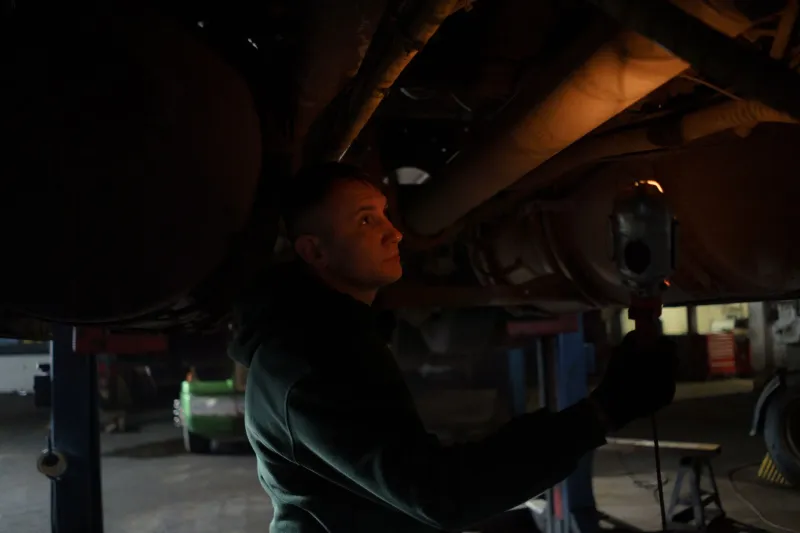
Buying a cheap used car is usually a hopeful business. The seller has cleaned it, the advert says 'runs and drives lovely', and there's a fresh MOT certificate in the glovebox. You take it round the block, nothing explodes, and suddenly you're imagining yourself in it. That's the problem. A fifteen-minute test drive is a conversation, not a diagnosis. A pre-purchase inspection at an independent garage is the bit where someone who isn't emotionally invested puts it on a ramp and tells you the truth.
For £50 to £150, depending on the car and how deep the garage goes, you get a second opinion from someone who sees the underside of neglected hatchbacks every day. On a sub-£3,000 car, that's not a luxury. It's often the difference between a cheap runaround and a money pit with a radio.
What a test drive simply cannot see
A test drive is good at catching the obvious. A hard clunk over a speed bump, a clutch that bites at the ceiling, a steering wheel that sits crooked. It is useless at catching corrosion tucked behind plastic sill covers, a brake pipe that's furred with rust, a shock absorber weeping quietly onto its own spring, or a front wing that's a slightly different shade because the car was repaired in a hurry.
You're also not just buying metal. You're buying someone else's maintenance decisions. The seller may be perfectly honest and still have no idea that the rear bushes are shot or that the car has a stored fault code waiting to light up the dash next month.
The ramp view: corrosion, repairs and the bits that bite
A proper inspection starts underneath. UK roads are brutal on sills, floor pans, subframes, suspension mounts, brake lines and fuel lines. A fresh MOT is a legal snapshot, not a warranty. It can pass with advisories that hint at rot starting, and it won't necessarily tell you that a brake pipe is one hard winter from letting go.
Accident repairs are another area where a quick look fails. An inspector can use a paint thickness gauge, check panel gaps, look for overspray on window rubbers and inspect welding and chassis legs. Most used cars have had a bump somewhere. The question is whether it was repaired properly or merely made to look alright for the forecourt photos.
Then there are the wearable parts that quietly add up: clutch wear, brake discs and pads, tyre ages and uneven wear, exhaust condition, suspension bushes, bearings and leaks. None of these are automatically deal-breakers. But they change the price. A £1,500 car that needs £900 of work before its next MOT isn't a bargain. It's a £2,400 car with extra hassle.
Fault codes don't always light the dashboard
This is one of the most useful things an inspection catches. A seller can clear fault codes just before you arrive. The dashboard stays dark, the test drive feels fine, and you drive away thinking you've got a clean car. A garage with a decent scanner can look for pending codes and stored history, and check whether the car's readiness monitors have been recently reset. If they have, someone has been wiping the evidence.
That's not proof of skulduggery. It could be an innocent battery change. But it's exactly the sort of thing you want to know before money changes hands.
Is it worth it on a sub-£3,000 car?
Yes, more often than you'd think. The cheaper the car, the less room you have for surprises. If £100 feels like a lot on a £2,000 hatchback, a £700 repair bill will feel considerably worse.
It's especially worthwhile when you're buying privately, when the service history is patchy, when the car has a long MOT but lots of advisories, when it's been sitting unused, or when the seller is keen for you to skip the whole process. It's less essential on a nearly new car with a manufacturer warranty, but even then an inspection can flag accident damage or a hard life.
There's a limit, of course. If you're spending £700 on a car you're happy to scrap at the first big bill, a full inspection may be overkill. But be honest about that plan before you buy, not after.
How to arrange one without making it weird
Private sellers can get twitchy when you mention inspections. The trick is to be straightforward and not make it feel like an accusation. Something like: 'I'm serious about the car. I'd like my local garage to put it on the ramp before I commit. I'll cover the cost and work around your schedule.'
Offer to meet at the inspection garage, or use a mobile inspector who comes to the car. Keep it to a reasonable window. If the seller refuses point-blank, that's information too. A genuine seller with nothing to hide might find it inconvenient, but most will understand. Put any deposit agreement in writing, however informal, and make it clear it's refundable if the inspection finds something serious.
While you're at it, check the V5C, look up the MOT history online, and do a paid history check for finance, theft and write-offs. The inspection is the physical side of the same conversation.
What you should actually get for your money
Ask for photos and a short written list of faults, not a vague phone call saying 'it's alright, mate'. A good report separates the urgent from the cosmetic and gives you an idea of cost. Ask the inspector two blunt questions: what would you fix before a 1,000-mile trip, and what would fail the next MOT?
That's the value. Not a guarantee that nothing will ever go wrong, but a clear picture of what you're buying before you hand over the cash. A test drive sells you the idea of the car. The ramp tells you what it's actually like underneath.